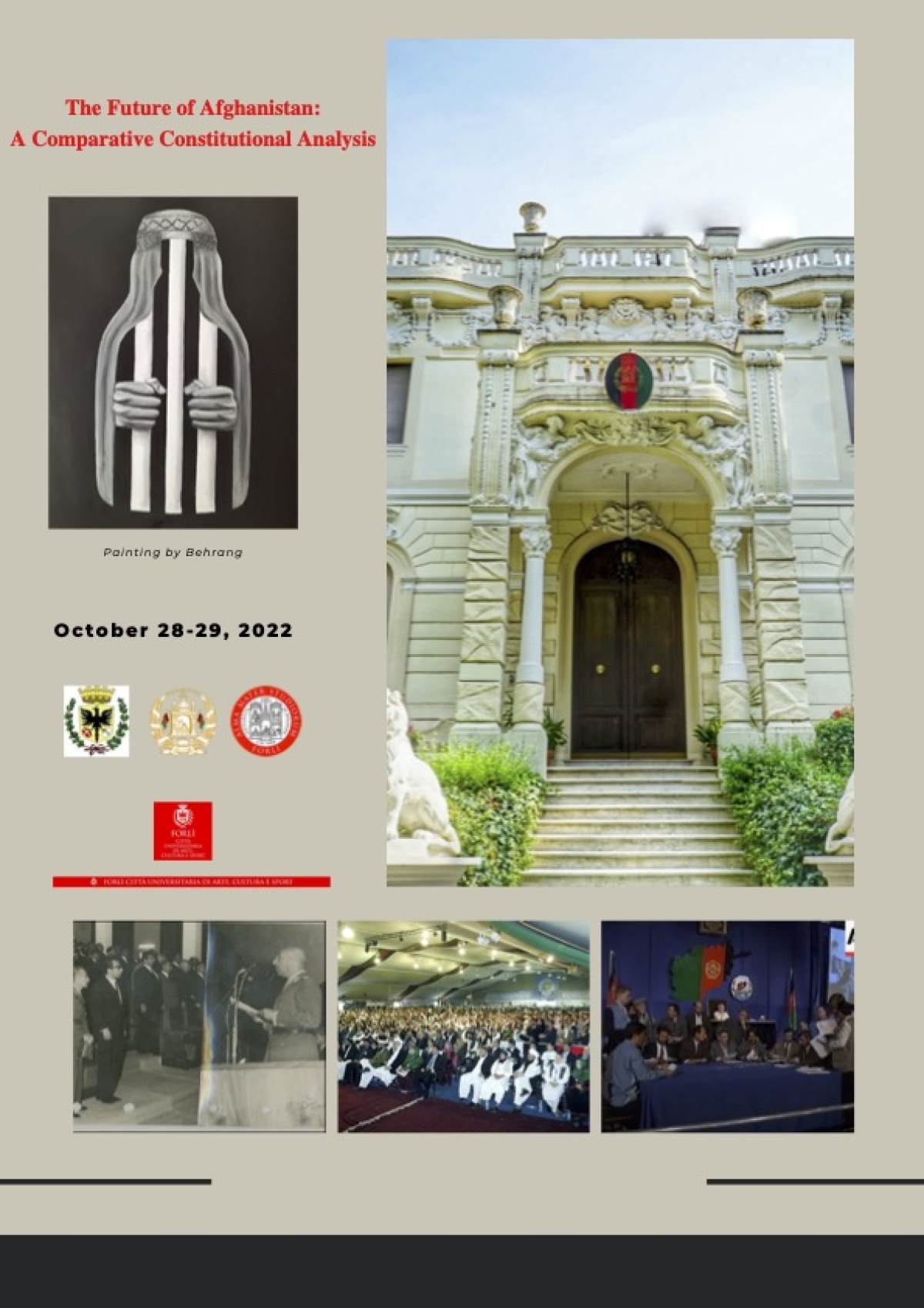
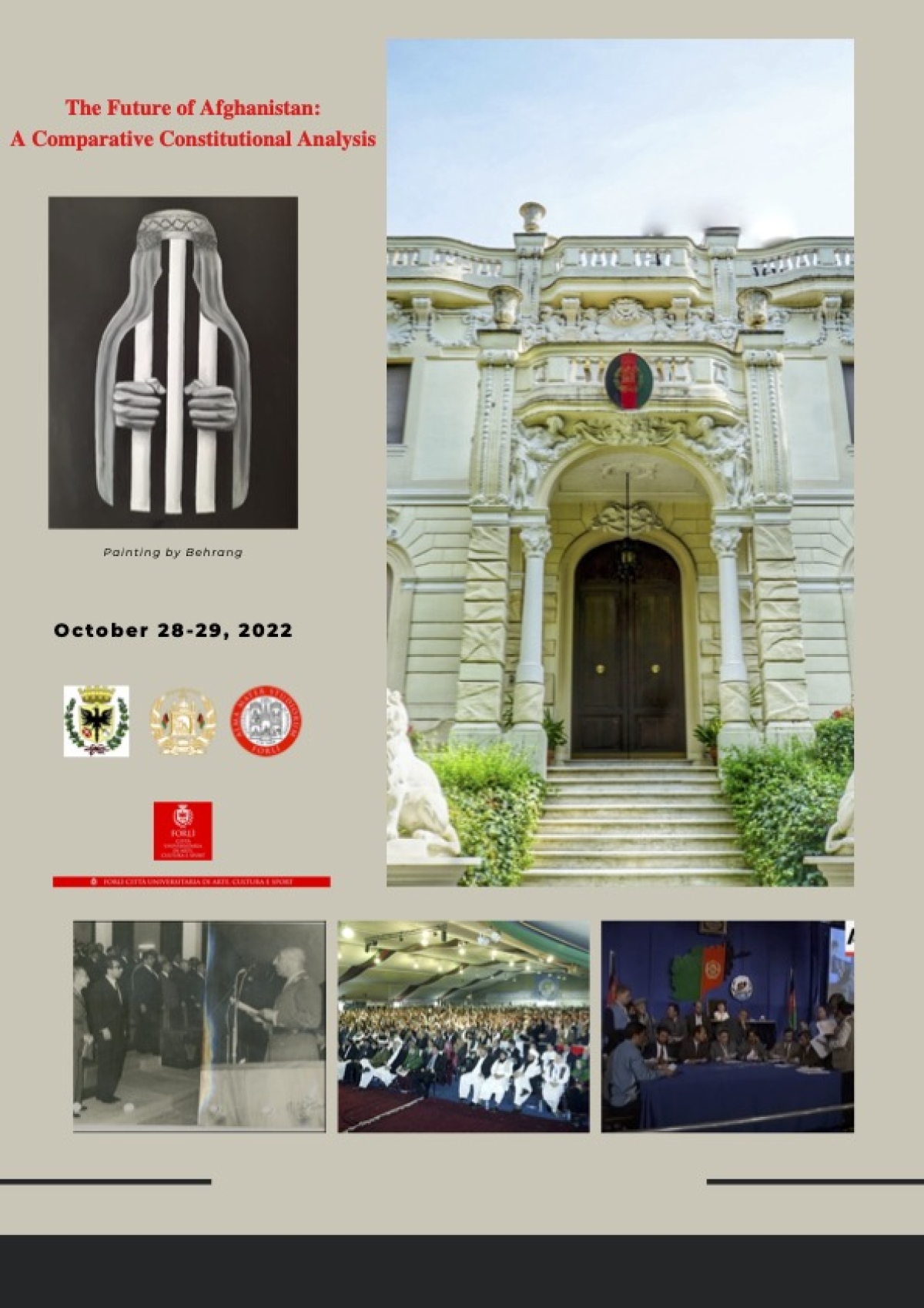
On 28 and 29 October 2022, under the auspices of the University of Bologna and the Embassy and Mission of the Islamic Republic of Afghanistan in Rome, indigenous and non-indigenous scholars gathered to discuss the future of Afghanistan, starting from the comparative analysis of the legal and constitutional framework of the country. Each speaker brought his/her own personal interpretation of the reasons that have contributed to the crises in Afghanistan. From a constructive perspective, the central role of the constitution for the development of Afghanistan has been reaffirmed. The constitutional basis of the State should be represented by the values of equality and non-discrimination, popular representation, mutual respect, justice and peace as well as the enhancement of local identities within the unity of the State.
Some of the following recommendations emerged as desirable reforms of the form of state and government, in order to strengthen the role of the constitution in a democratic and inclusive sense:
1) The decentralisation of power, both in the form of government, in the sense of full implementation of the separation of powers and effective checks and balances, through a decrease in the powers of the executive branch, the strengthening of parliament and the independence of the judiciary; whether, in the form of a state, in the sense of distribution of power and other incentives to the local and provincial representative bodies;
2) The empowerment of the representative principle, through institutions that can guarantee popular and democratic participation in the definition of the country’s development policies;
3) The implementation and guarantee of the principle of formal and substantial equality, without discrimination of gender, ethnicity, language, denomination and religion, by promoting the plurinational principle of unity in diversity, respecting all the individual and collective identities, which make up the great Afghan people;
4) The establishment of forms of transitional justice, in the light of the above premise, to set out historical truths and create inter-ethnic and inter-religious pacification, a fundamental condition for a society that looks to the future, while remembering their shared historical past; and
5) The enhancement of the role of women and youth in an open and inclusive society, which recognizes the emancipatory power of the education of children, adolescents and young people.
This manifesto is the legacy that the community of Afghan and Italian scholars gathered in Forlì and Rome in these two days, which symbolically needs to be conveyed to the Afghans inside the country and Afghans around the world, who together are fighting to build a better future for their country.
However, considering the diplomatic stance of this Embassy and Mission in Rome, the views presented by the esteemed speakers during the conference over the past two days, do not represent nor portray those of the Embassy and Mission of the Islamic Republic of Afghanistan in Rome, Italy.
The Embassy and Mission of the Islamic Republic of Afghanistan in Rome firmly believes that although there were challenges in enforcing the constitution in Afghanistan, the ratified constitutions of 1964 in the country has been one of the most progressive and efficient and the 2004 constitution has been one of the most democratic in the region.
In the last two decades, with the help of the international community, the Islamic Republic of Afghanistan has had great achievements in enforcing the rule of law and thus creating an environment for the people to freely live in the country. Forming inclusive governments, providing freedom of speech, granting girls and women as well as ethnic minorities with their legal and natural rights, developing a robust civil society, creating independent judicial bodies for preserving justice and equality and many more are the great achievements that no one can ignore nor deny.
Therefore, we conclude that organizing this conference with the help of the University of Bologna, which brought together indigenous and non-indigenous academics, activists, experts, parliamentarians, military/security personnel, and diplomats living in Afghanistan, Italy, and across the world was an opportunity to reflect on the importance of the constitutional framework as well as ways and means to safeguard the rights and values as envisaged in the current living constitution of Afghanistan. Additionally, these recommendations contained in the manifesto can be used as a vital legal base in the possible continuation of the intra-Afghan peace talks, through which the rights of all Afghan citizens, especially women, girls and minorities are fully protected, and that an inclusive and elected government based on a ratified and viable constitution is established in Afghanistan.