
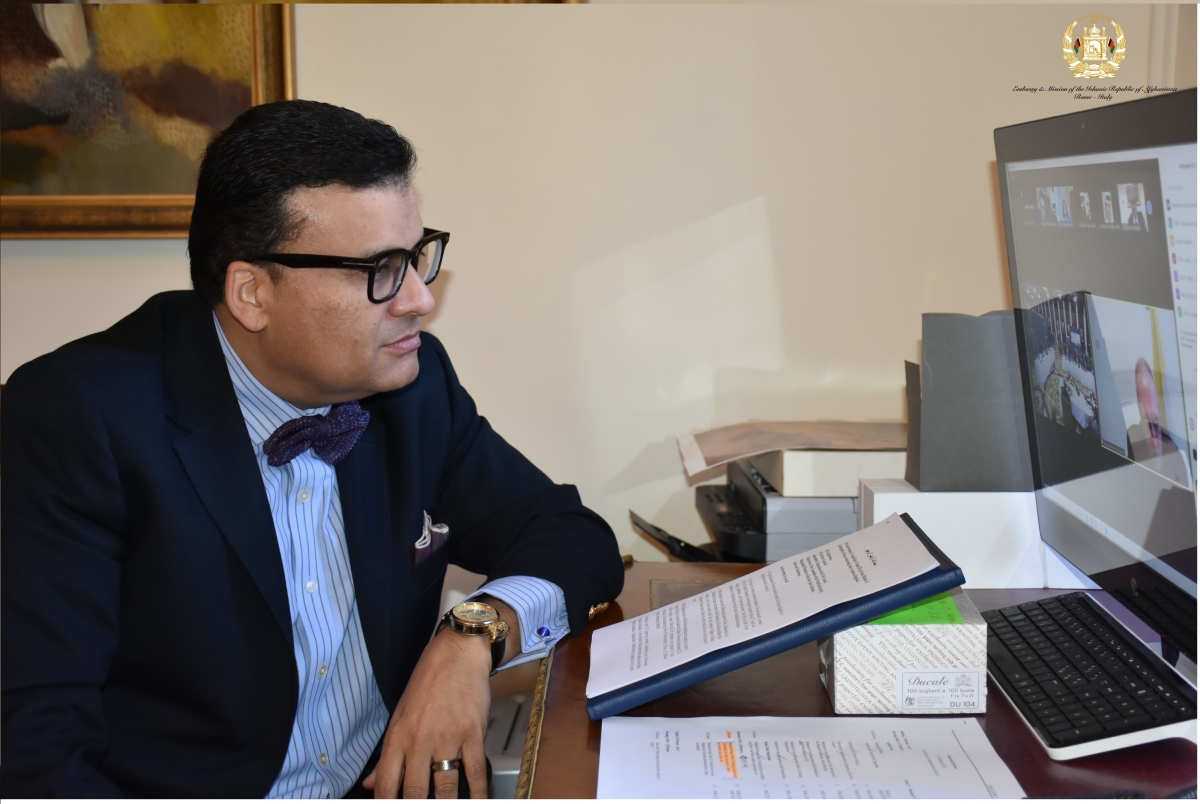
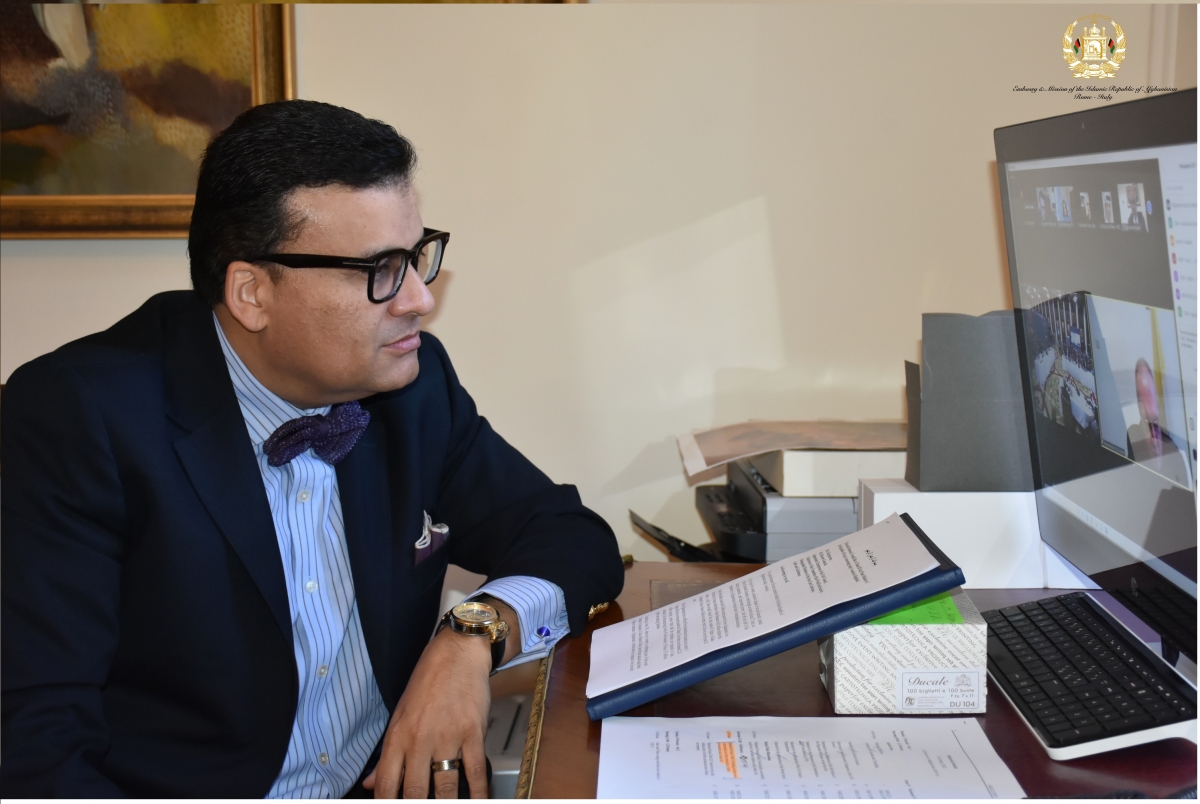
Statement of Ambassador Khaled Ahmad Zekriya at the 36th Session of FAO Regional Conference for the Near East
بسم الله الرحمن الرحیم
First and foremost, I would like to Thank HE the Prime Minister of the Republic of Iraq to convening today’s session in Baghdad.
Mr. Chairperson,
Mr. Director General,
Independent Chairperson of the FAO Council,
Chairperson of the Committee of the World Food Security,
Distinguished Members of the Near East Conference,
Ladies and Gentlemen,
Good afternoon.
It is a great pleasure for me to attend on behalf of the Islamic Republic of Afghanistan today’s session.
As you may be aware, successive decades of war and insecurity, annual cycles of natural disasters, worst drought on record in the last 27 years, an ongoing pandemic, and deep-rooted poverty, have left over half of the population of Afghanistan in critical need of humanitarian assistance.
Nearly 6 months since the Taliban seized power by force, Afghanistan is on the brink of a mass starvation, which threatens to kill 1 million children this winter, a toll that would dwarf the total number of Afghan civilians estimated to have been killed as a direct result of the war over the past 20 years.
While Afghanistan has suffered from malnutrition for decades, the country’s hunger crisis has worsened under the Taliban. This winter, an estimated 22.8 million people, more than half the population, are expected to face potentially life-threatening levels of food insecurity. Of those, 8.7 million people are nearing famine.
According to the UN, since my country is confronting one of the worst droughts in decades, it has withered fields, starved farm animals and dried irrigation channels. Afghanistan’s wheat harvest is expected to be as much as 25 percent below average this year. In rural areas, where roughly 70 percent of the population lives, many farmers have given up cultivating their land.
Mr. Chairperson,
Distinguished Delegates,
For decades, small farmers and rural communities survived the winters on stored wheat from their summer harvest and the income from selling onions in the market. But this year yielded barely enough to sustain families during the fall months. Without food to last this winter, some Afghans have migrated to cities hoping to find work or to other districts to depend on the help of relatives.
Now with the freezing winter, as it was alluded earlier that humanitarian organizations are warning that 1 million children could die, and millions of other Afghans will be forced to choose between migration and starvation, it is vital to engage and empower indigenous actors at the community level to work toward inclusive and sustainable programs, which could bring together local actors to identify and address needs that can help rebuild disrupted communities and relationships. Humanitarian agencies should also advocate to the international community for the resumption of essential food trade with Afghanistan and invest in programs to promote linkages between development assistance and humanitarian response, especially with an emphasis on disaster risk reduction resilience and building of vulnerable communities against shocks. Additionally, the stabilization of Afghanistan's food markets is essential for the well-being of the population, particularly for households facing food deficits. Functional food markets and the ability to pay local suppliers will make humanitarian response more effective. Lastly, ensuring adequate monitoring of food insecurity and malnutrition during the winter season.
Mr. Chairperson,
Distinguished Colleagues,
In conclusion, since Afghanistan does not have a robust framework of solutions on food security to be implemented, especially with its low budget and the wide range of security, political, economic, and social challenges, the food crisis in Afghanistan is one of the most crucial issues that requires immediate solutions. Hence, building resilience is an imperative to achieve economic development and contribute to building peace in Afghanistan. Moreover, there is an urgent need to create pathways between FAO and other near countries to create opportunities to build more inclusive, resilient, and sustainable agri-food system for Afghanistan.
Thank you.
